
Awards & Recognition
2023
Guild of American Luthiers
Excellence
2022
Healdsburg Guitar Festival
Best Steel-String
2024
Holy Grail Guitar Show
Juror's Choice
2021
Guild of American Luthiers
Merit Award
2019
Healdsburg Guitar Festival
Innovation
47 instruments built.
0 returned.
A one-person workshop in Northern California. Spruce tops tap-tuned by knuckle. Rosewood bridges hand-fitted to thousandths of an inch. Raw timber turned into instruments that outlive their players.
01 / Setup
at the 12th fret
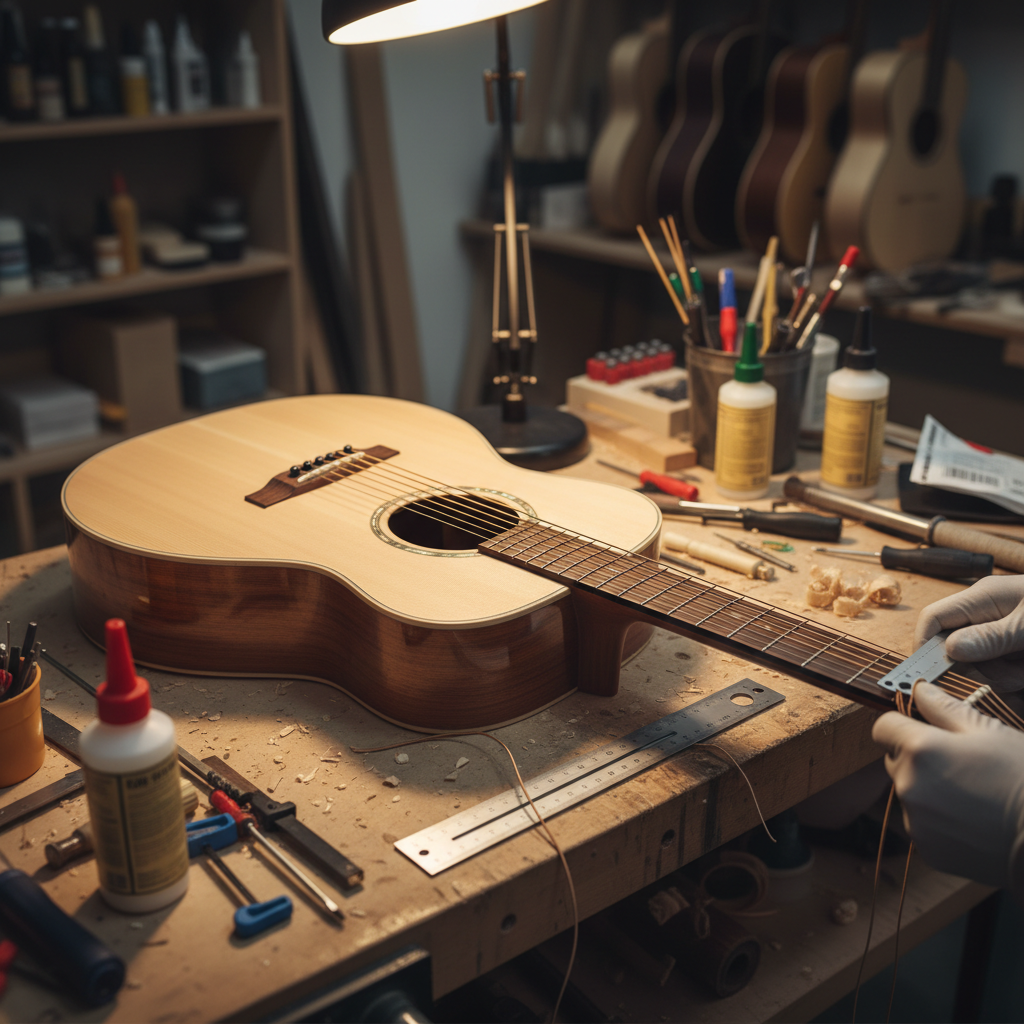
Action set for fingerstyle players who dig in — measured with a feeler gauge, not a guess.
Every neck leaves this bench with relief dialled to 0.010″ and action confirmed at the 12th fret before the nut is cut. Most production guitars ship at 4mm or higher. The difference is whether you fight the instrument or play it.

Saddle slot routed to 0.001″ tolerance on a hand-ground chisel

Spruce stack, humidity-controlled room — 2015 harvest
02 / Tonewoods
aged before carving
European spruce cut in 2015, stickered in a humidity-controlled room at 45–50% RH. Wood that hasn't finished moving has no business becoming a soundboard.
Tap-tuning isn't mysticism — it's listening for the Chladni patterns that tell you where the plate wants to flex. A top with the wrong tap frequency fights the bridge; one that's right amplifies frequencies the player can't even hear consciously, but their body feels.
03 / Neck
neck depth at 1st fret
The profile your fretting hand remembers from that one guitar you played in 1987 and never found again. Asymmetric C-to-D taper, bass side slightly deeper.
No two necks here are identical because no two hands are. A commission starts with a hand tracing and a conversation about repertoire — fingerpickers get a different profile than strummers. The carve is done in passes with a spokeshave, checked against a radius gauge, and refined until it disappears in your grip.

Neck blank in progress — mahogany, asymmetric C carve

Nitro lacquer — coat 7 of 12, drying in the booth
04 / Finish
finish thickness
Nitrocellulose lacquer applied in 12 coats, levelled between each. The finish is thin enough that the wood still breathes — a guitar isn't furniture.
Thick polyester finishes are fast and durable. They also damp the top's vibration and make every guitar sound slightly encased. Nitro takes three weeks to cure properly. It checks, it ages, it develops a patina. It also gets out of the wood's way and lets the instrument become itself.
Free Resource
The Buyer's Guide to
Handmade Guitars
34 pages covering wood selection, scale length trade-offs, tap-tone basics, and the 11 questions to ask any luthier before you commission an instrument. Written in the same plain language you'll find on this page.
Current Build Queue
5 instruments in progress.
All spoken for.
Commission slots open quarterly. The waitlist currently runs 8 months. The Buyer's Guide tells you what to prepare.
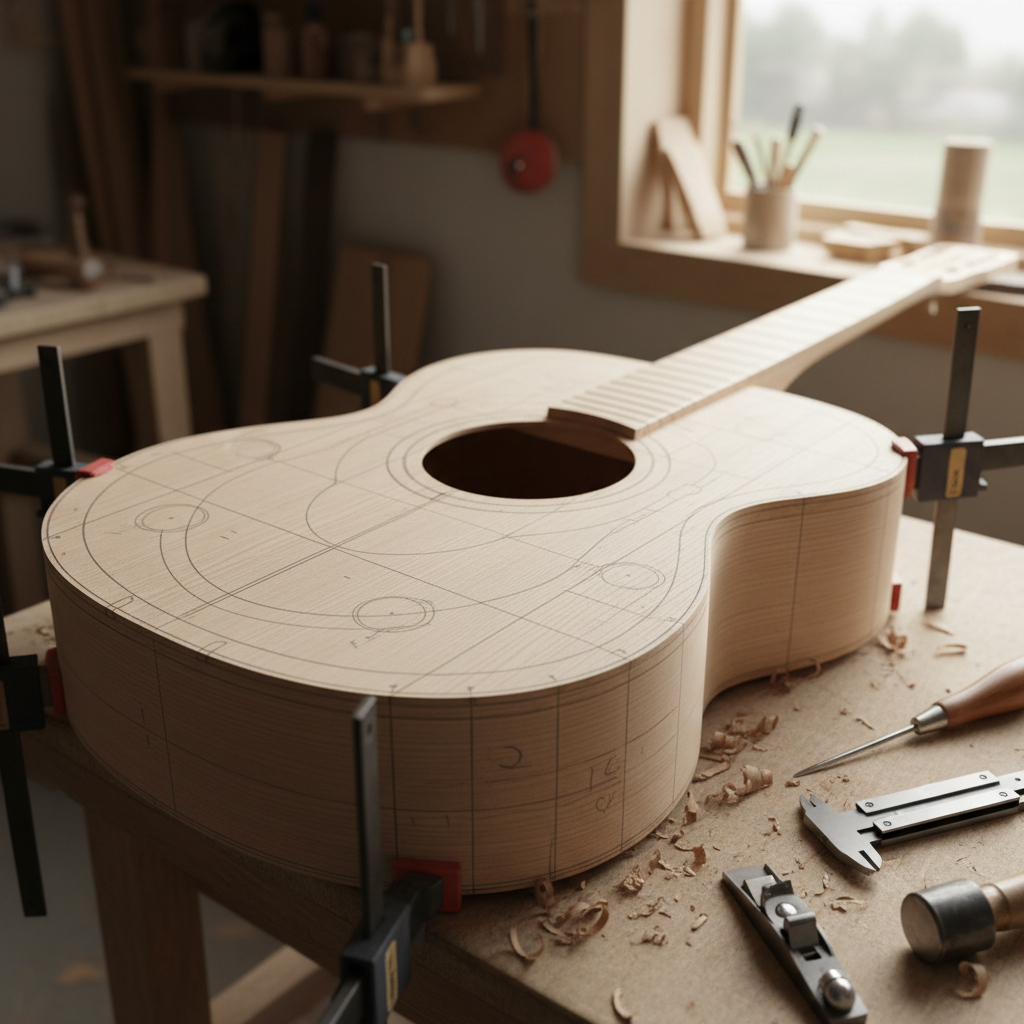
OM-7 Fingerstyle
Sitka spruce / Indian rosewood
Top carved
Week 4 of 14
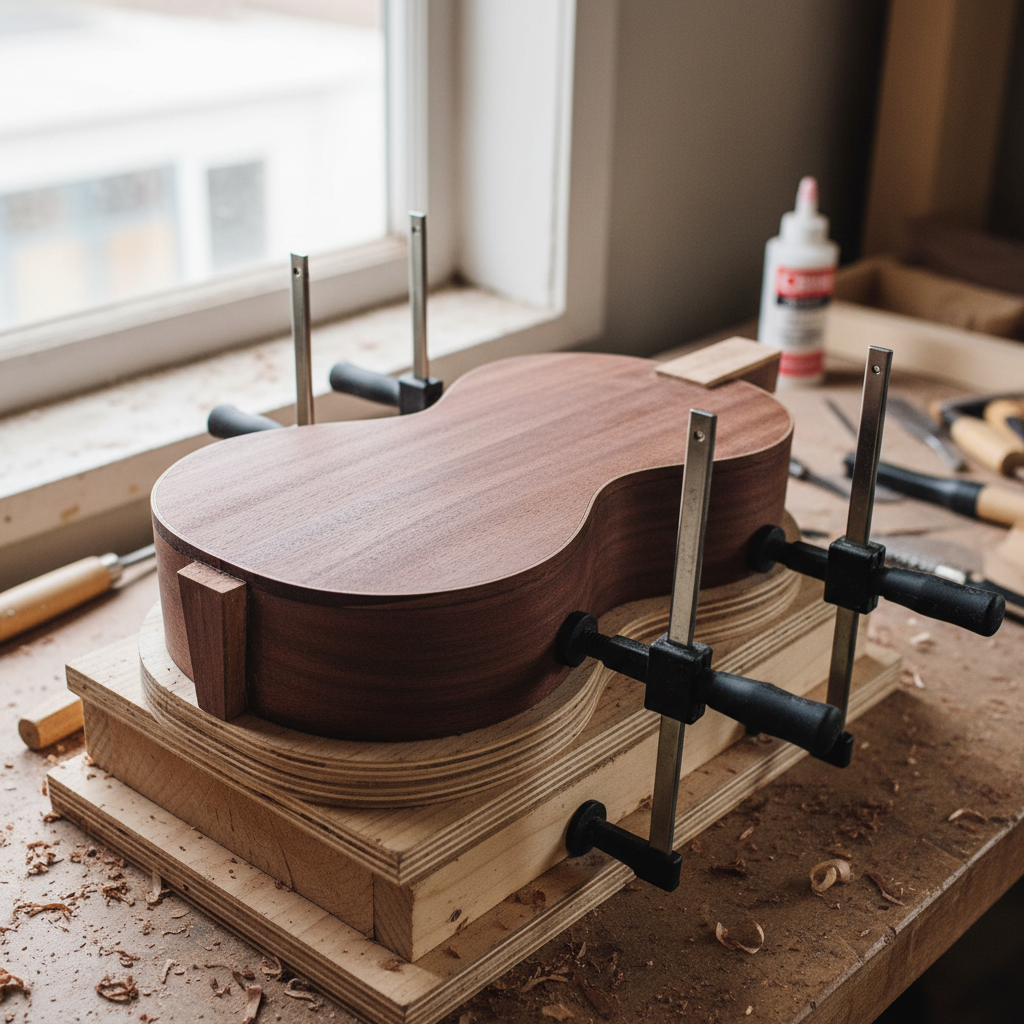
000-12 Parlour
European spruce / mahogany
Sides bent
Week 2 of 14
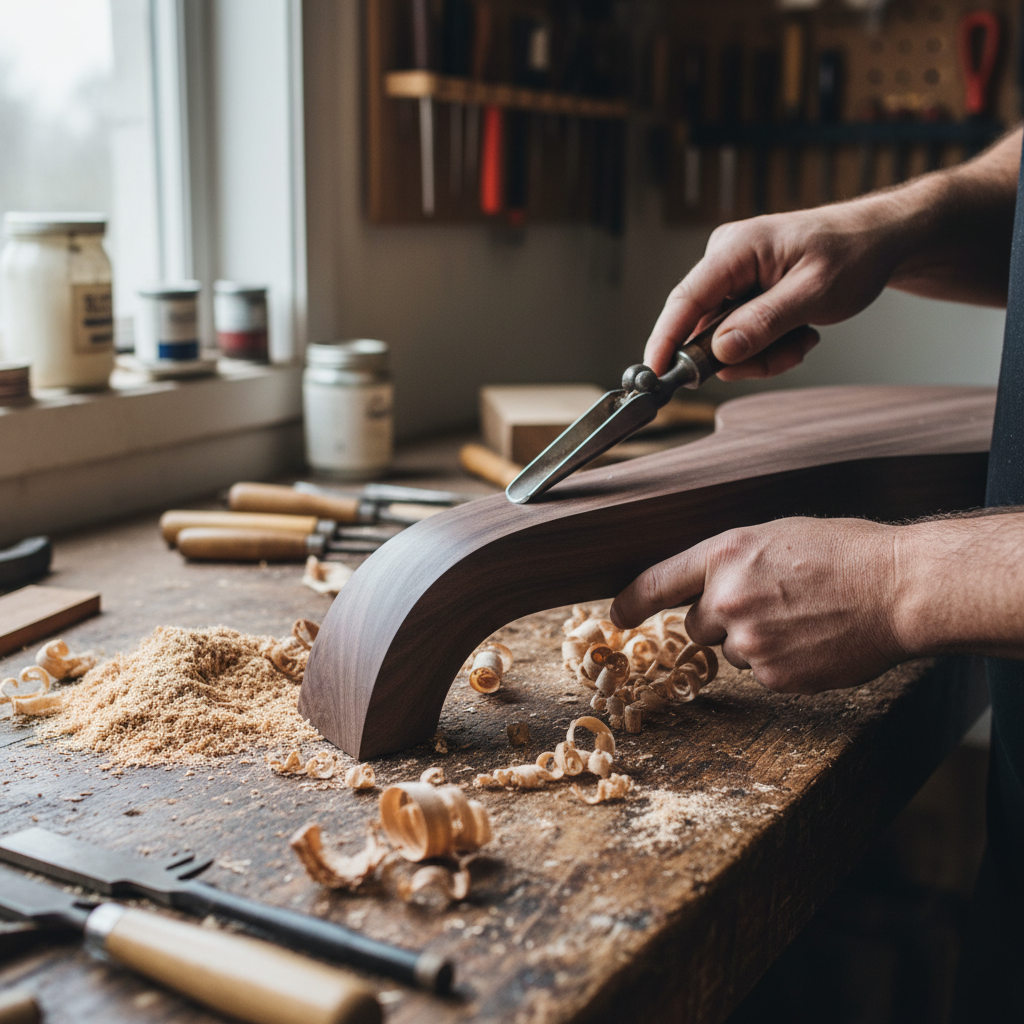
Dreadnought D-4
Adirondack spruce / walnut
Neck carve
Week 7 of 14
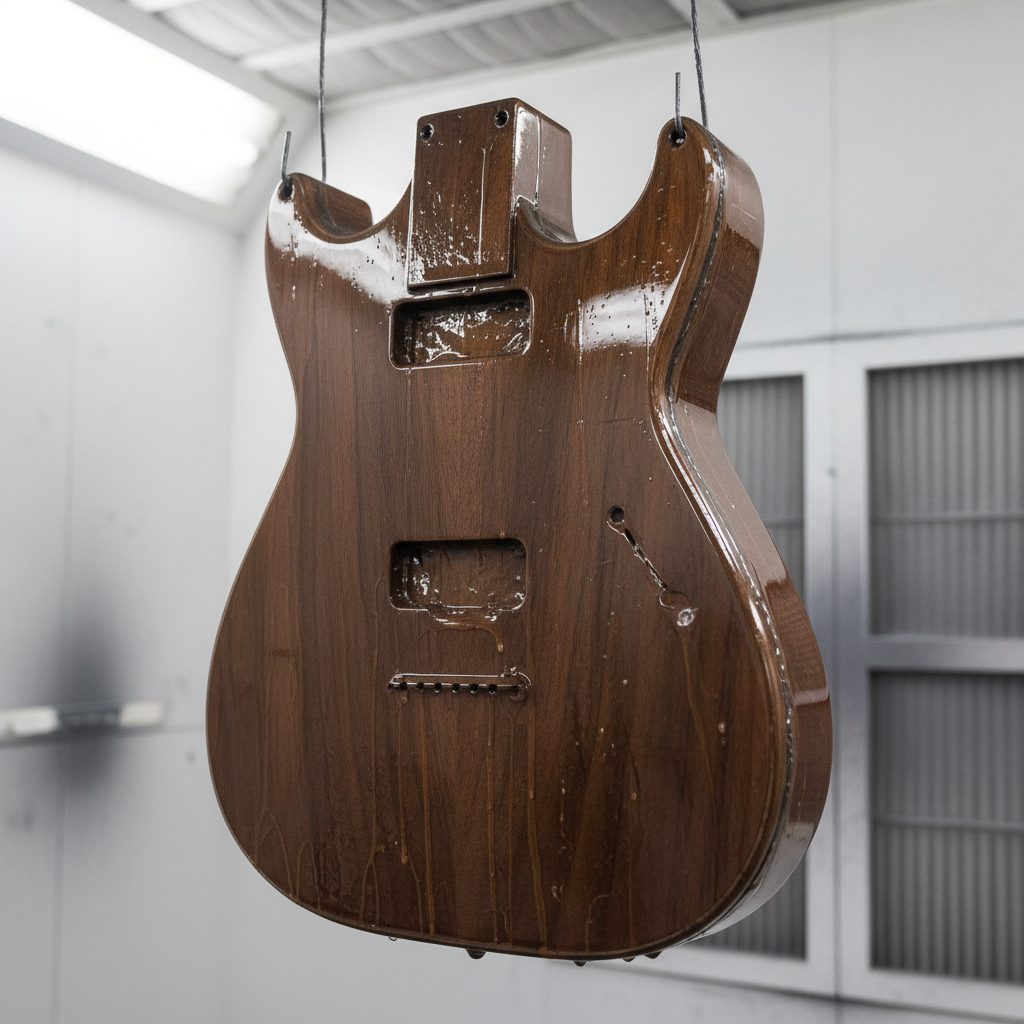
Baritone B-2
Engelmann spruce / ebony
In finish
Week 11 of 14
OM-8 Commission
Sitka spruce / Brazilian cherry
Setup & string
Week 13 of 14